
Exploring Grief: Voices from Two Cultures (Ni De Aquí, Ni De Allá)
Catching up over coffee on pérdida ambigua, first-gen identity, and the heavy stuff nuestra cultura doesn't always have words for.
¡Hola! Grab your coffee, pull up a chair, and let's catch up for a minute.
Have you ever tried explaining a deep feeling, only to realize the words just don't hit the same in English or Spanish?
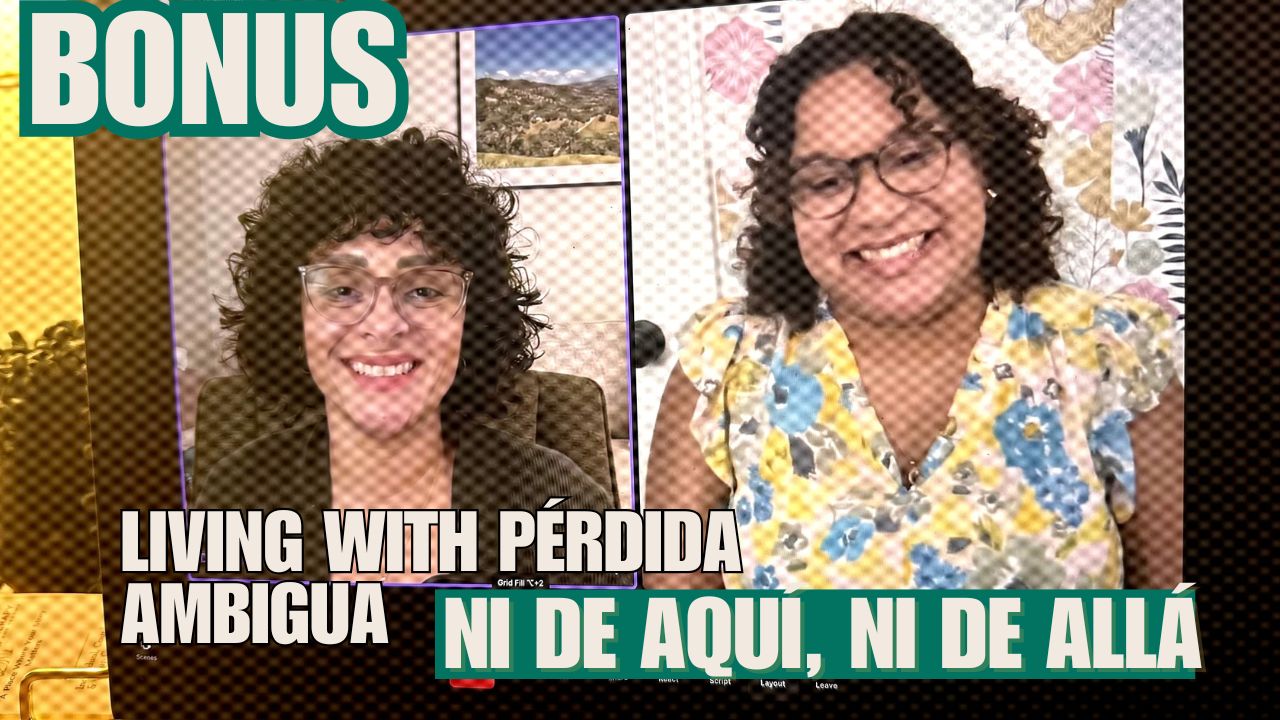
That’s exactly where we’re at in our latest bonus Spanglish episode of The Living Loss Podcast. I sat down with my close friend and cousin, Eliana Perez, for a super relaxed, "sitting around the table with family" kind of conversation. We’re digging into what it really feels like to navigate life between two worlds, that whole ni de aquí, ni de allá experience and shining a light on the non-traditional grief we almost never talk about out loud in our families.
I actually opened up to Eliana about the spark behind creating this space in the first place. I’ve always had this creative itch, and as I got deeper into my work as a counselor, grief and trauma kept calling to me. But I didn't want a stiff, clinical studio vibe. The goal was always simple: build a warm, cozy space where we could talk about the heavy stuff just as easily as catching up over cafecito.
Growing up in nuestra cultura, we were basically taught to just keep moving, put your head down, echa pa’lante, and don't stop to process the hard stuff. But the truth is, you can't heal what you don't acknowledge. Eliana and I talked about how hard it is to process pain when you were never given the emotional vocabulary for it as a kid. For the longest time, the only word I really knew for grief was luto (mourning) and let's be real, that word doesn't even come close to covering everything we carry.
We also talked a lot about what it means to live with dual identities, constantly straddling two realities. Eliana put it so perfectly when she said, "I can’t complain about living here, but that doesn’t erase the other part either." It’s that quiet, heavy tension known as ambiguous loss (pérdida ambigua), that ongoing, living grief of missing your culture, your extended family, or your homeland when it’s still very much alive, just physically far away.
Looking back at our childhoods isn't about pointing fingers or holding grudges. As I shared in the episode: "When we talk about what we didn’t have as children, we are not blaming our parents. They did what they could with what they had." Realizing that is huge. It lets us drop the judgment, step out of pure survival mode, and finally give ourselves permission to heal on our own terms.
This conversation felt so much like home. If you’ve ever felt split between two worlds or carried a loss nobody brought you flowers for, I truly made this episode for you.
Come hang out with us, listen in on the story, and let’s keep learning to stand unapologetically in who we are.
With so much love,
Daiana